

Meet the Assistance Dogs changing lives across the UK

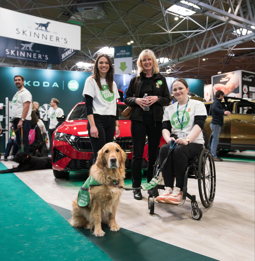
For thousands of people across the UK, an assistance dog isn't just a companion. They're a partner, giving their owner the confidence to do things many of us take for granted.
What is an assistance dog?
An assistance dog is a highly trained dog that helps a disabled person or someone with a long-term health condition by carrying out tasks that make everyday life easier. Those tasks are tailored to the individual, meaning every partnership is unique.
While guide dogs are perhaps the best known, assistance dogs can support people in many ways. Depending on their training, they might:
- Guide someone with sight loss.
- Alert their owner to important sounds.
- Detect changes in blood sugar levels.
- Retrieve medication or everyday items.
- Open doors and operate switches.
- Help with mobility.
- Remind someone to take medication.
- Alert their owner to an oncoming medical episode.
The different types of assistance dogs
No two assistance dogs have the same job. Each dog is trained to meet the specific needs of the person they'll support.
Some of the different types of assistance dogs include:
-
Guide dogs
-
Hearing dogs
-
Medical detection dogs
-
Mobility assistance dogs
-
Autism assistance dogs
-
Psychiatric assistance dogs
Every partnership is built around trust, teamwork and years of training, helping people live with greater confidence and independence every single day.
What’s the difference between an Assistance dog and a therapy dog?
It's a question many people ask, but there's an important difference.
An assistance dog is individually trained to carry out specific tasks that help one disabled person or someone with a long-term health condition.
A therapy dog has a different role. They provide comfort and emotional support to many different people, often visiting schools, hospitals and care homes.
Emotional support dogs are different again. While they provide companionship, they aren't trained to perform disability-related tasks in the same way as an assistance dog.
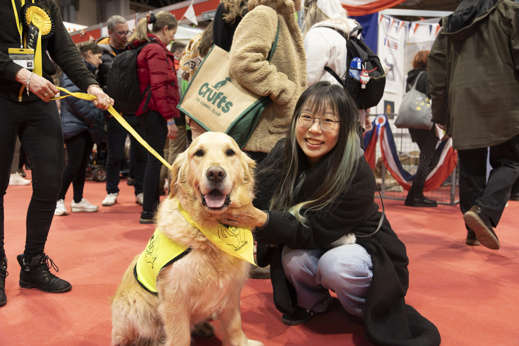
How are assistance dogs trained?
Becoming an assistance dog takes time, patience and plenty of hard work.
Many dogs begin their training as puppies, learning how to stay calm and confident in all kinds of environments. As they develop, they're taught specialist skills based on the role they'll eventually perform.
For charities that are members of Assistance Dogs UK (ADUK), training can take up to two years before a dog is ready to be partnered with its owner.
Along the way, assistance dogs learn how to travel on public transport, ignore distractions, behave calmly in busy places and carry out the tasks they'll perform every day once partnered.
Assistance dog charities in the UK
Many of the UK's leading assistance dog charities are members of Assistance Dogs UK (ADUK), a coalition of organisations accredited to internationally recognised training and welfare standards. Current ADUK members include:
Each charity specialises in different areas of assistance dog training and has its own eligibility criteria and application process.
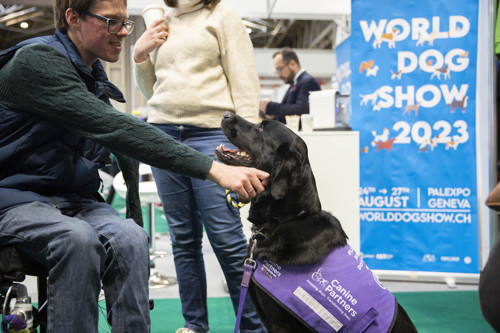
What are the laws around assistance dogs in the UK?
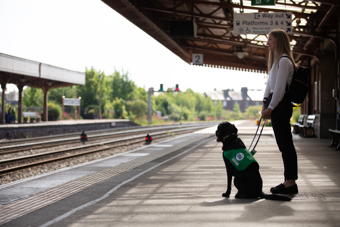
One of the biggest misconceptions is that assistance dogs must wear a jacket or carry an ID card. In fact, there's no legal requirement for either, and there isn't any official registration or certification scheme for assistance dogs in the UK.
Under the Equality Act 2010, people accompanied by highly trained assistance dogs have legal protections. In most circumstances, businesses and service providers must make reasonable adjustments to allow access, even where pet dogs wouldn't usually be permitted.
That means assistance dogs are welcome in places such as shops, cafés, restaurants, hotels, visitor attractions and on public transport.
It's also worth remembering that not every disability is visible. Someone partnered with an assistance dog shouldn't be questioned simply because their condition isn't immediately obvious or their dog isn't wearing identifiable equipment.
Every assistance dog has a story. Behind every partnership are trainers, volunteers, puppy raisers and charities working together to help people live with greater confidence and independence.
International Assistance Dog Week is a chance for us all to celebrate those partnerships and recognise the life-changing impact assistance dogs have every day.
At Crufts, we're lucky enough to see many of these inspiring partnerships firsthand through our Hero Dog Award. Over the years, assistance dogs and their owners have shared their incredible stories on the Crufts stage, reminding us just how powerful the bond between people and dogs can be.
From helping someone navigate the world safely to providing support during everyday life, these incredible dogs prove that some of the most extraordinary moments happen far beyond the show ring.
If you'd like to discover more inspiring stories, take a look at our Hero Dog Award winners and finalists, where you'll meet some truly remarkable dogs and the people whose lives they've helped transform.


